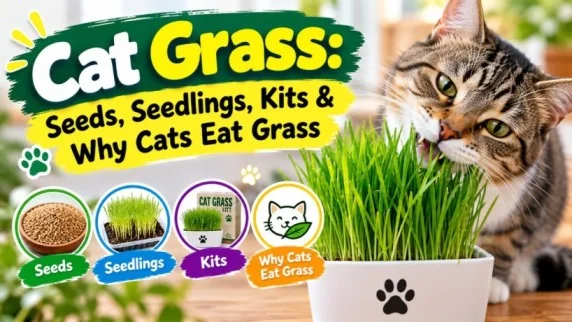
Cat Grass: Seeds, Seedlings, Kits & Why Cats Eat Grass

Cat Grass: Seeds, Seedlings, Kits & Why Cats Eat Grass

Cat grass is a simple way to give indoor cats access to fresh, pet-friendly plants. Many cats enjoy nibbling on grass, and growing it at home can be easy with seeds, seedlings, or a cat grass kit. If you are wondering why do cats eat grass, whether can cats eat grass, or how to grow cat grass seeds, this guide explains what you need to know.

What Is Cat Grass?

Cat grass is a general term for grasses that are commonly grown indoors for cats to nibble on. It is not one specific type of plant. Common options include:
  • Wheatgrass
  • Oat grass
  • Barley grass
  • Rye grass
These grasses are different from ornamental houseplants, some of which can be harmful to cats.

Cat Grass Seeds

Cat grass seeds are widely available for growing fresh grass at home. Wheat, oat, barley, and rye seeds are common choices. When buying cat seeds grass, look for seeds specifically sold for growing pet-safe grass. Avoid seeds that have been treated with chemicals or pesticides unless the product clearly states they are appropriate for this use. Store unused seeds in a cool, dry place until you are ready to plant them.

Cat Grass Seedlings

Cat grass seedlings are young grass plants that have already started growing. They can be useful if you want to provide grass to your cat without waiting for seeds to germinate. If you grow grass from seeds, seedlings often appear within several days under suitable conditions. Place the grass in an area with appropriate light and keep the soil lightly moist. Avoid soaking the soil because excessive moisture can encourage mold.

Cat Grass Kit

A cat grass kit can make growing grass easier for beginners. Many kits include seeds, a growing container, and a growing medium. A basic cat grass kit may include:
  • Cat grass seeds
  • Soil or a growing medium
  • A tray or pot
  • Growing instructions
Always check the packaging to see what is included.

Why Do Cats Eat Grass?

Why do cats eat grass? There is no single explanation that applies to every cat. Cats may chew grass because they enjoy its texture or taste. Some cats may also show interest in plants as part of their natural exploratory behavior. You may notice your cat eating grass occasionally without showing any signs of illness. Occasional grass eating can be normal behavior for some cats.

Why Do Cats Like to Eat Grass?

Why do cats like to eat grass? Fresh grass may provide an interesting texture and sensory experience. Indoor cats may also be attracted to plants because they naturally explore their environment. Providing cat grass can give them a designated plant to investigate. However, cat grass should not replace a complete and balanced diet.

Can Cats Eat Grass?

Can cats eat grass? Generally, cats can safely nibble on appropriate types of untreated cat grass. The important part is knowing what plant your cat is eating. Some common houseplants can be toxic to cats. For safety:
  • Choose grass intended for pets.
  • Avoid pesticides and chemical treatments.
  • Keep toxic plants away from cats.
  • Remove grass that develops mold.
  • Monitor your cat while introducing new plants.
If your cat eats a large amount of grass or develops repeated vomiting, diarrhea, lethargy, or other concerning symptoms, contact a veterinarian.

How to Grow Cat Grass

Growing cat grass from seeds is relatively simple.
  1. Fill a clean container with suitable growing medium.
  2. Spread the cat grass seeds across the surface.
  3. Cover them lightly according to the seed instructions.
  4. Add a small amount of water.
  5. Place the container in a suitable location with light.
  6. Keep the growing medium lightly moist.
  7. Allow the grass to grow before giving it to your cat.

Read also;  Litter Robot 3: Troubleshooting, Connect, Parts, Dimensions & More

Grasses Cats Can Eat

The term grasses cats can eat generally refers to pet-safe varieties such as wheatgrass, oat grass, barley grass, and rye grass. Different cats may prefer different varieties. You can try one type at a time and see which your cat enjoys. Always identify a plant before allowing your cat to chew on it.

Conclusion

Cat grass can be an easy and enjoyable addition to an indoor cat's environment. You can grow it from cat grass seeds, purchase cat grass seedlings, or use a convenient cat grass kit. Cats may eat grass because they enjoy its taste and texture or simply because they are exploring their surroundings. Choose untreated, pet-safe grass and keep potentially toxic plants away from your cat.

Frequently Asked Questions

What is cat grass?

Cat grass is a general term for pet-safe grasses that cats can nibble on. Common varieties include wheatgrass, oat grass, barley grass, and rye grass.

Why do cats eat grass?

Cats may eat grass because they enjoy its taste or texture or because of natural exploratory behavior. There is not one confirmed reason for every cat.

Can cats eat grass?

Cats can generally eat appropriate, untreated cat grass in moderation. Make sure the plant is correctly identified and has not been treated with harmful chemicals.

What are the best cat grass seeds?

Wheat, oat, barley, and rye seeds are common choices. Choose seeds intended for growing pet-safe grass.

How long does cat grass take to grow?

Cat grass can begin sprouting within several days under suitable conditions. Growth time varies depending on the seed type, temperature, moisture, and light.

What is a cat grass kit?

A cat grass kit typically contains seeds and some of the materials needed to grow grass indoors, such as a container or growing medium.

Are cat grass seedlings safe for cats?

Pet-safe grass seedlings can be suitable for cats. Make sure the plants are untreated and correctly identified before allowing your cat to eat them.

Can cats eat regular lawn grass?

It depends on the grass and how it has been treated. Lawn grass may contain pesticides, fertilizers, or other substances that can be unsafe. Pet-specific cat grass is a safer option.