
What Is a Stainless Steel Litter Box?
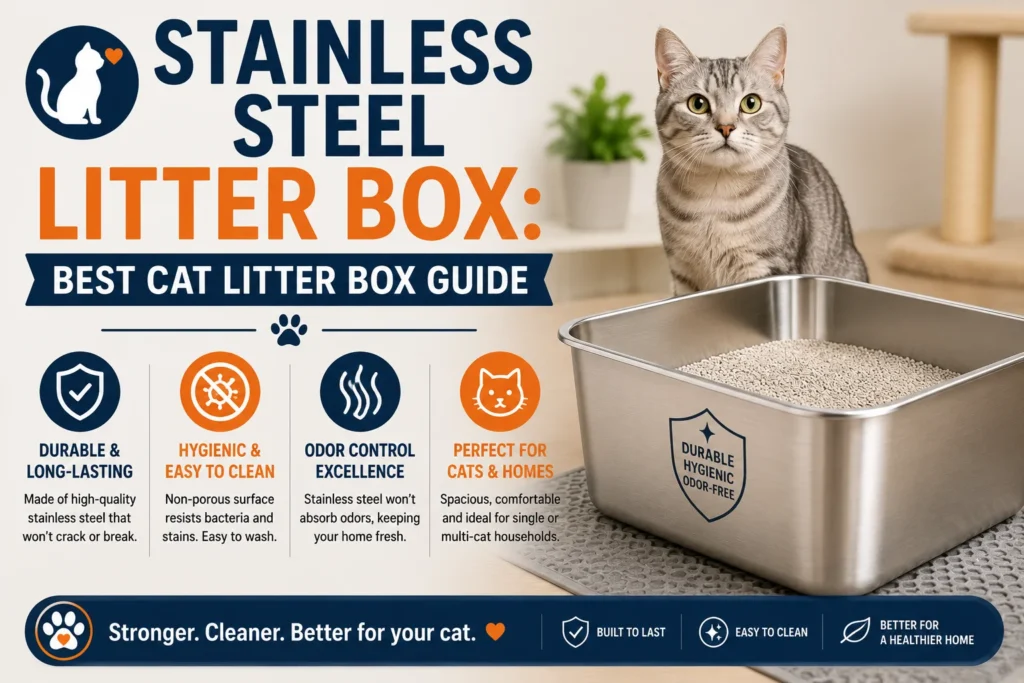
A stainless steel litter box is a cat litter tray made primarily from stainless steel rather than plastic. Stainless steel is a nonporous material, which means it generally doesn't absorb moisture and odors in the same way some plastic surfaces can over time. Most stainless steel litter boxes have a simple tray design, while some models include:- High sides
- Removable lids
- Splash guards
- Carrying handles
- Rounded corners
- Reinforced edges
Benefits of a Stainless Steel Cat Litter Box
1. Easy to Clean
Stainless steel has a smooth surface that can make scooping and washing easier. With proper cleaning, residue is less likely to remain embedded in the surface.2. Odor Resistance
Because stainless steel is nonporous, it doesn't absorb odors as readily as some plastic surfaces. However, odor control still depends heavily on the litter used, cleaning frequency, ventilation, and the number of cats using the box.3. Durable Construction
A quality stainless steel cat litter box can withstand regular scooping and cleaning without cracking or becoming brittle like some plastic products.4. Moisture Resistance
Stainless steel does not absorb urine or water, making it a practical material for a litter tray.5. Long-Term Use
Although stainless steel litter boxes can cost more initially, their durability may make them useful for long-term use.Stainless Steel vs. Plastic Litter Boxes
Both materials can work well, but they have different characteristics.| Feature | Stainless Steel | Plastic |
| Durability | High | Varies |
| Odor absorption | Low | Can increase over time |
| Cleaning | Easy | Easy initially |
| Weight | Usually heavier | Lightweight |
| Rust resistance | Good with quality steel | Not applicable |
| Cost | Often higher | Usually lower |
| Longevity | Potentially long-lasting | Can wear over time |
Stainless Steel Litter Box With Lid
A stainless steel litter box with lid can provide additional privacy and may help contain some litter scatter. Covered designs can also reduce the amount of litter that gets kicked outside the box. However, not every cat likes a covered litter box. Before choosing one, consider:- Entrance size
- Interior space
- Ventilation
- Ease of cleaning
- Your cat's comfort
- Accessibility for older or mobility-limited cats
Choosing the Right Size
Size is one of the most important factors when buying a litter box. Your cat should have enough room to:- Enter comfortably
- Turn around
- Dig
- Find a comfortable elimination position
- Exit without difficulty
High-Sided Stainless Steel Litter Boxes
High sides can help reduce litter scatter and may be useful for cats that tend to spray or kick litter during digging. However, high walls should not make it difficult for your cat to enter or exit. For older cats or cats with mobility problems, a lower entry point may be more important than maximum wall height.How to Clean a Stainless Steel Litter Box
Regular cleaning is essential regardless of the litter box material.Daily Cleaning
Scoop waste regularly and remove visibly soiled litter.Regular Washing
Empty the box when necessary and wash it with warm water and a mild, pet-safe cleaning solution. Rinse thoroughly and dry the box before adding fresh litter.Avoid Harsh Chemicals
Avoid using cleaning products that leave strong residues or fumes that could irritate your cat. Never mix cleaning chemicals.How Many Litter Boxes Should You Have?
A commonly recommended starting point is one litter box per cat, plus one extra. For example, a household with two cats may benefit from three litter boxes. The ideal setup can depend on your home, the cats' relationships, and available space.Pros and Cons
Pros
- Durable
- Easy to clean
- Nonporous surface
- Doesn't absorb odors as readily
- Resistant to moisture
- Long-lasting
Cons
- Can be more expensive
- Heavier than plastic
- Metal can be noisy when cats dig
- Some cats may prefer open plastic designs
- Covered versions may not suit every cat