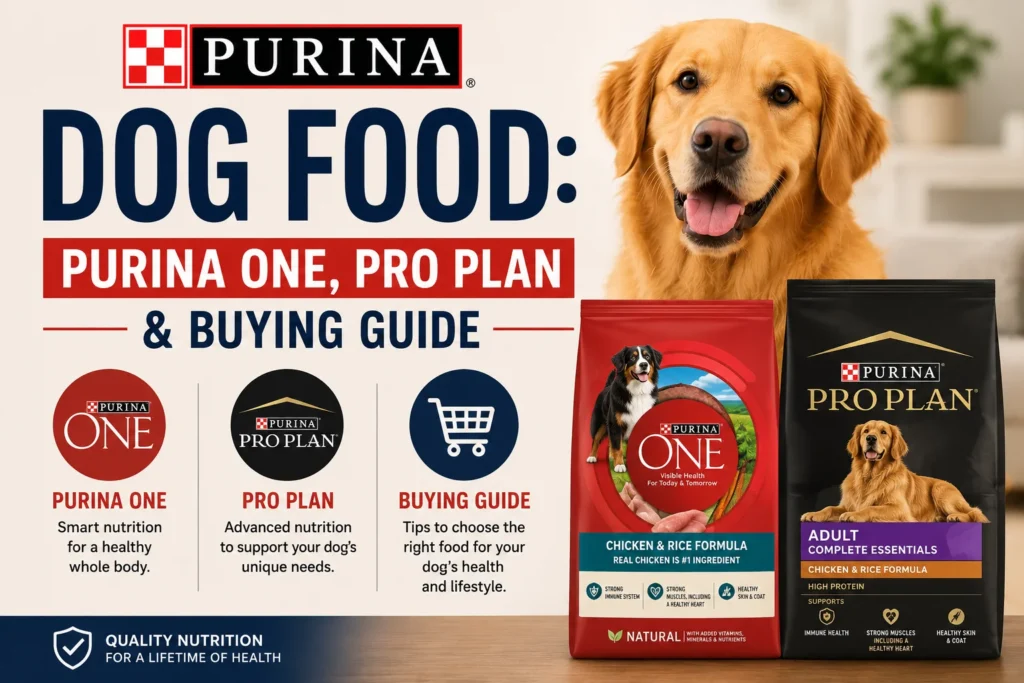

What Is Purina Dog Food?
Purina dog food is a broad range of dog foods offered under several Purina brands and product lines. Options include dry kibble, wet food, puppy formulas, adult diets, senior nutrition, and specialized recipes. Purina's dog food products are designed around different nutritional needs rather than using one formula for every dog. Factors such as age, breed size, activity level, weight, and individual preferences can influence which food is appropriate.Purina ONE vs. Purina Pro Plan
Purina ONE and Purina Pro Plan are both Purina dog food lines, but they offer different ranges of formulas and nutritional approaches.| Feature | Purina ONE | Purina Pro Plan |
| Puppy formulas | Yes | Yes |
| Adult formulas | Yes | Yes |
| Senior options | Yes | Yes |
| Small/large breed options | Available | Available |
| Wet food | Available | Available |
| Specialized nutrition | Available | Extensive range |
| Sensitive skin & stomach options | Available | Available |
| Performance-focused formulas | Limited | Available |
Purina ONE Dog Food
Purina ONE dog food offers formulas for different ages, sizes, and nutritional needs. It can be a practical option for owners looking for a variety of everyday dog food choices. Depending on the specific formula, Purina ONE products may be available for:- Puppies
- Adult dogs
- Senior dogs
- Small breeds
- Large breeds
- Weight management
- Sensitive stomachs
- Different flavor preferences
Purina Pro Plan Dog Food
Purina Pro Plan dog food has a particularly broad selection of specialized formulas. Purina currently lists options for puppies, toy and small breeds, large and giant breeds, sensitive skin and stomach, weight management, sport/performance, adult dogs, and dogs age 7+. Pro Plan also includes both wet and dry food. Purina says its Pro Plan dry dog foods use real beef, lamb, poultry, or salmon as the first ingredient, depending on the formula. Some Pro Plan formulas also contain probiotics intended to support digestive health.Purina Pro Plan vs. Purina ONE: Which Is Better?
There isn't one answer that applies to every dog. Purina ONE may be a good option if you're looking for a straightforward everyday formula that matches your dog's life stage and nutritional needs. Purina Pro Plan may be worth considering when you want a more specialized formula for needs such as sensitive skin and stomach, weight management, specific breed sizes, senior dogs, or athletic/performance-focused dogs. The most important consideration is whether the specific food is appropriate for your dog—not simply whether it is Purina ONE or Pro Plan.How to Choose the Best Purina Dog Food
Before buying a bag or case of Purina dog food, consider these factors.1. Your Dog's Age
Puppies have different nutritional requirements from adult and senior dogs. Puppy foods are formulated to support growth and development, while adult formulas are designed for maintenance. Purina notes that puppies need nutrients that support development, including protein and DHA.2. Breed Size
Your dog's size can influence the type of food you choose. Small and toy breeds may benefit from appropriately sized kibble, while large and giant breeds can benefit from formulas designed around their nutritional and physical needs.3. Activity Level
An active working or sporting dog may have different nutritional requirements from a less active companion dog. Consider your dog's daily exercise, activity level, and body condition when selecting a formula.4. Weight
If your dog is overweight or needs help maintaining a healthy body condition, consider a formula specifically designed for weight management. Don't drastically reduce food portions without guidance. Your veterinarian can help determine an appropriate feeding plan.5. Sensitive Skin or Stomach
Some dogs have dietary sensitivities or digestive concerns. Purina Pro Plan, for example, offers formulas specifically designed for sensitive skin and stomach needs. If your dog has persistent digestive symptoms, itching, or other health concerns, speak with a veterinarian before changing the diet.Dry vs. Wet Purina Dog Food
Purina offers both dry and wet dog food, including options under Purina ONE and Pro Plan.Dry Dog Food
Dry kibble is convenient, easy to store, and simple to measure. It can also be practical for households that prefer feeding scheduled meals.Wet Dog Food
Wet food can provide a different texture and flavor that some dogs prefer. It can also add moisture to the diet.Can You Mix Wet and Dry Food?
Many dogs can eat a combination of wet and dry food as long as the overall diet provides appropriate nutrition and calories. When combining foods, adjust portions so you're not unintentionally overfeeding your dog.What Does "Complete and Balanced" Mean?
When shopping for dog food, one of the most important things to check is the nutritional adequacy statement on the package. A food labeled complete and balanced is formulated to provide the required nutrients for the life stage indicated on the label. Purina recommends checking the AAFCO statement when comparing dog foods. The appropriate food may differ depending on whether your dog is a puppy, adult, or belongs to another life-stage category.How Much Purina Dog Food Should You Feed?
The correct serving amount depends on factors such as:- Your dog's weight
- Age
- Activity level
- Body condition
- The specific food's calorie density
- Whether treats or other foods are also being provided
How to Switch to Purina Dog Food
Changing your dog's food too quickly can cause digestive upset. A gradual transition is generally preferable. A simple approach is to:- Begin by mixing a small amount of the new food with the current food.
- Gradually increase the amount of new food.
- Decrease the amount of the old food at the same time.
- Monitor your dog's appetite and stool.
- Slow down the transition if digestive problems occur.
What Should You Look for on a Purina Dog Food Label?
Before purchasing, review the label for:- Intended life stage
- Breed-size information
- Feeding instructions
- Calorie information
- Ingredient list
- Nutritional adequacy statement
- Guaranteed analysis
- Storage instructions