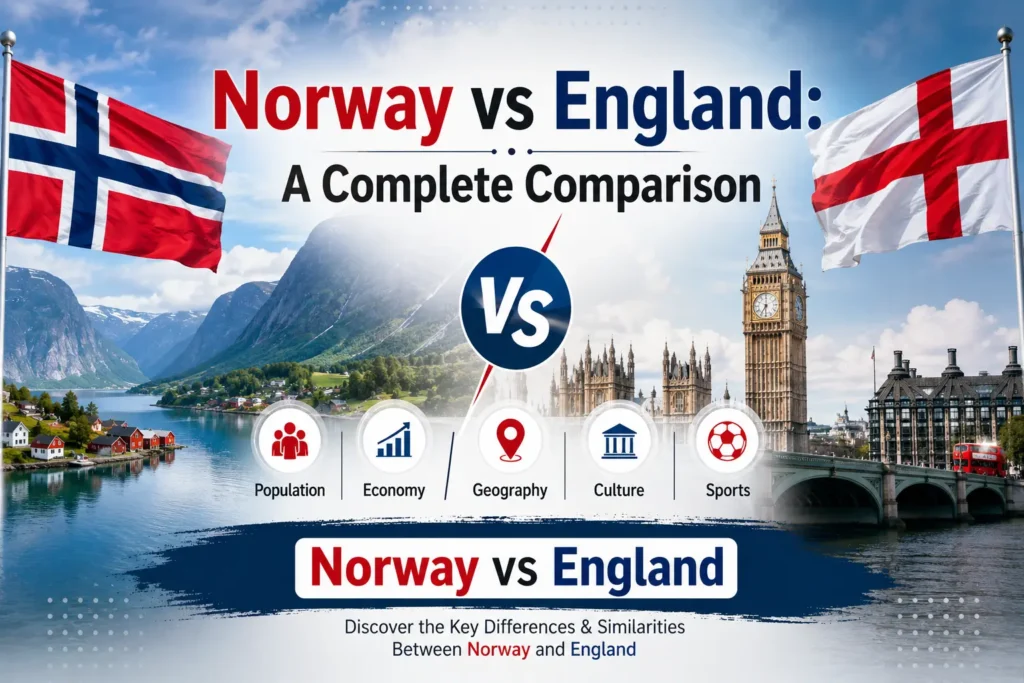
Norway and England are two fascinating destinations with very different landscapes, cultures, histories, and lifestyles. While both are located in Europe and have strong connections to the modern world, they offer completely different experiences. Norway is known for its dramatic fjords, mountains, northern lights, and peaceful lifestyle, while England is famous for its historic cities, royal heritage, football culture, and diverse urban life.If you are planning a trip, considering studying abroad, thinking about relocation, or simply interested in comparing these two places, understanding the major differences can help. This guide explores geography, climate, culture, food, lifestyle, travel, costs, and other important factors.
Geography and Natural Beauty
Norway is located in Northern Europe and is famous for its spectacular natural scenery. The country has long coastlines, deep fjords, snow-covered mountains, forests, waterfalls, and thousands of islands. Some of its most famous natural attractions include the Geirangerfjord, Lofoten Islands, and the landscapes of northern Norway.England has a different type of beauty. It features rolling green countryside, coastal cliffs, historic villages, national parks, and beautiful lakes. Popular natural areas include the Lake District, Yorkshire Dales, and the Cornwall coastline.For people who love dramatic mountains, fjords, and wilderness, Norway may be the better choice. England is particularly appealing to travelers who enjoy countryside walks, historic towns, and a combination of nature and urban attractions.
Climate and Weather
The climate is another major difference between Norway and England. Norway generally has colder temperatures, especially during winter. Northern areas can experience extremely long winter nights, while some regions see the midnight sun during summer.England has a milder climate. Winters are usually cool rather than extremely cold, while summers are generally moderate. Rain can occur throughout the year, and the weather is known for changing quickly.If you prefer warmer and milder conditions, England may be more comfortable. However, people who enjoy snow, winter scenery, skiing, and cooler temperatures may find Norway more attractive.
Culture and Lifestyle
Norwegian culture places strong importance on nature, independence, equality, and a healthy work-life balance. Outdoor activities are an important part of everyday life. Hiking, skiing, cycling, and spending time in nature are popular activities.England has a more diverse and historically layered culture. Traditional pubs, afternoon tea, football, music, literature, and historical landmarks are strongly associated with English life. Major cities such as London, Manchester, Liverpool, and Birmingham also offer highly diverse communities and lifestyles.When comparing norway vs england in terms of lifestyle, Norway generally offers a quieter and more nature-focused environment, while England provides greater urban variety and a faster pace in its major cities.
Food and Cuisine
Norwegian food is strongly influenced by the country's geography and access to the sea. Seafood such as salmon, cod, and herring is popular. Traditional dishes may also include potatoes, bread, meat, and dairy products.Alos Read: Spain vs Argentina: Which Is Better?England has a much broader international food scene, particularly in its large cities. Traditional English foods include fish and chips, roast dinner, Yorkshire pudding, pies, and full English breakfast. Modern England also offers Indian, Chinese, Italian, Middle Eastern, and many other international cuisines.Norway can be especially appealing to seafood lovers, while England offers greater variety for people who enjoy trying different international dishes.
History and Heritage
Both countries have long and fascinating histories, but their historical experiences are quite different.Norway has a strong Viking heritage. Its history includes seafaring, exploration, medieval kingdoms, and centuries of cultural development across Scandinavia. Visitors can explore historic churches, Viking museums, traditional settlements, and ancient cultural sites.England has an exceptionally rich historical heritage that includes Roman Britain, medieval castles, the Tudor period, the Industrial Revolution, and the development of the British Empire. Historic landmarks can be found throughout the country.England may have the advantage for travelers interested in castles, royal history, medieval architecture, and famous historical events. Norway is particularly interesting for people fascinated by Vikings, Scandinavian history, and maritime traditions.
Football and Sports
Football is extremely popular in both countries, but England has a particularly influential football culture. The English Premier League attracts fans from around the world and includes famous clubs such as Manchester United, Liverpool, Arsenal, Chelsea, and Manchester City.Norway also has a strong football tradition and has produced talented players who have gained international attention. In addition to football, winter sports are extremely important in Norway. Skiing and other snow-based activities are deeply connected to Norwegian culture.For professional football and major football competitions, England has a clear advantage. For skiing and winter sports, Norway is one of Europe's standout destinations.
Cost of Living
The cost of living can vary significantly depending on where you live. Norway is generally considered an expensive country, particularly for restaurants, groceries, accommodation, and services. However, wages are also relatively high, and the country has a strong social welfare system.England also has significant differences between regions. London is one of the most expensive places to live, while smaller cities and towns can be considerably more affordable.When comparing norway vs england, neither country can simply be described as cheap. Your actual expenses will depend heavily on the city, housing choices, lifestyle, and income.
Travel and Transportation
Norway is well known for scenic travel. Train journeys, coastal routes, ferries, and road trips can provide spectacular views of mountains, fjords, and countryside. However, traveling between remote areas can take considerable time.England has an extensive transportation network, including trains, buses, roads, and domestic airports. London also has one of the world's most recognized public transportation systems.England is generally easier for travelers who want to visit several cities quickly. Norway is ideal for travelers who want scenic journeys and outdoor adventures.
Education and Work Opportunities
Both Norway and England offer opportunities for education and employment, although their systems are different. England has internationally recognized universities and a large range of industries, particularly in finance, technology, education, healthcare, media, and business.Norway has a strong economy with important industries including energy, shipping, technology, fisheries, engineering, and renewable energy. The country is also known for its high standard of living.Your choice will depend on your career goals, education requirements, language skills, and preferred lifestyle.
Final Verdict: Norway vs England
The comparison between norway vs england does not have one universal winner. Each offers advantages depending on what you want from your experience.Choose Norway if you prefer spectacular natural landscapes, fjords, mountains, skiing, outdoor activities, and a quieter lifestyle. It can be an excellent choice for people who value nature and work-life balance.Choose England if you prefer historic cities, football, international food, cultural diversity, famous universities, and extensive transportation connections. England can be especially attractive for people who enjoy busy cities and a wide range of entertainment.Ultimately, norway vs england is a comparison between two very different European experiences. Norway stands out for its natural beauty and peaceful lifestyle, while England combines history, modern cities, culture, and international influence. The better choice depends entirely on your personal interests, budget, career plans, and preferred way of life.
Author
Steven Mark
Creators
Exploring ideas, trends, and real-world stories to inspire fresh thinking, support daily learning, and help you discover something valuable every day.