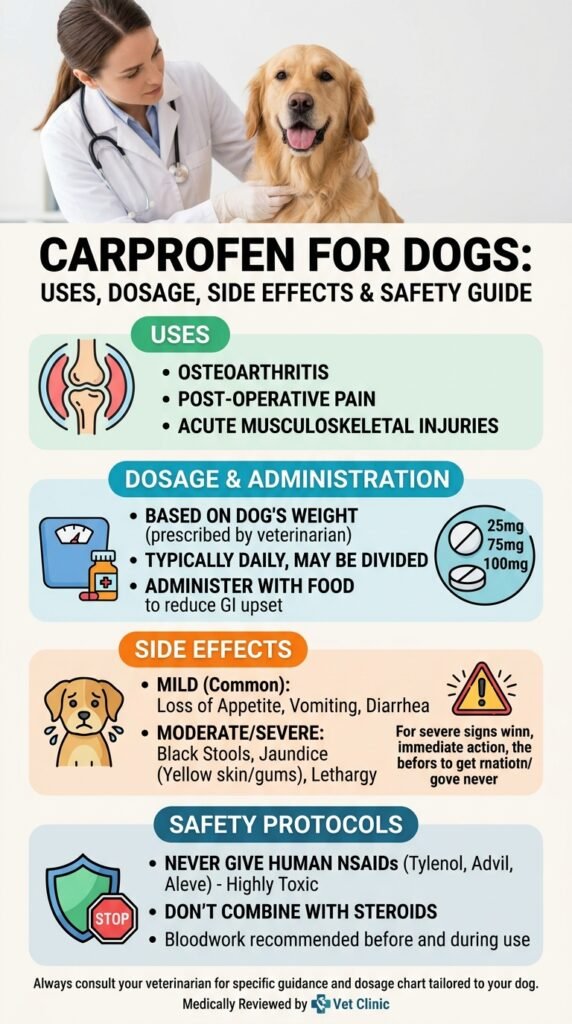
Carprofen for Dogs: Uses, Dosage, Side Effects & Safety Guide

Carprofen for dogs is a prescription medication commonly used by veterinarians to relieve pain, reduce inflammation, and improve mobility in dogs. It is frequently prescribed for arthritis, joint pain, and recovery after surgery. If you're wondering what is carprofen for dogs, how it's used, or looking for information about carprofen dosage for dogs, this guide explains its benefits, possible side effects, and important safety information. Important: Carprofen is a prescription medication. Always use it exactly as directed by your veterinarian and never give human pain relievers to dogs unless specifically instructed by a veterinary professional.

What Is Carprofen for Dogs?

Carprofen is a nonsteroidal anti-inflammatory drug (NSAID) approved for use in dogs. It helps reduce pain and inflammation without using steroids. Veterinarians commonly prescribe carprofen for dogs to manage:
  • Osteoarthritis
  • Joint pain
  • Hip dysplasia discomfort
  • Soft tissue injuries
  • Post-operative pain
  • Inflammation after surgery
.Read also;   Spot Pet Insurance: Coverage, Reviews, Login & Complete Guide

What Is Carprofen for Dogs Used For?

If you're asking what is carprofen for dogs, its primary purpose is to relieve pain caused by inflammation. Common uses include:

Osteoarthritis

Carprofen can help reduce stiffness and improve mobility in dogs with arthritis.

Recovery After Surgery

Veterinarians often prescribe carprofen following orthopedic or soft tissue surgery to manage pain and inflammation.

Injury Management

It may also be used for certain sprains, strains, or other musculoskeletal injuries when recommended by a veterinarian.

Carprofen Dosage for Dogs

The appropriate carprofen dosage for dogs depends on several factors, including:
  • Body weight
  • Age
  • Overall health
  • Medical history
  • The condition being treated
Never calculate or adjust your dog's dosage yourself. Your veterinarian will determine the correct dose and treatment schedule based on your dog's individual needs. If you accidentally miss a dose, follow your veterinarian's instructions. Do not double the next dose unless specifically advised.

How Is Carprofen Given?

Carprofen is commonly available as:
  • Chewable tablets
  • Caplets
  • Injectable formulations (administered by a veterinarian)
Many dogs readily accept flavored chewable tablets. Your veterinarian may recommend giving the medication with food to help reduce stomach upset.

Possible Side Effects

Like all medications, carprofen for dogs may cause side effects. Some dogs experience no problems, while others may develop mild or more serious reactions. Possible side effects include:
  • Vomiting
  • Diarrhea
  • Reduced appetite
  • Lethargy
  • Increased thirst
  • Increased urination
Although uncommon, more serious reactions can occur, such as liver, kidney, or gastrointestinal complications. Contact your veterinarian immediately if your dog develops:
  • Persistent vomiting
  • Bloody stool
  • Black, tarry stool
  • Yellowing of the eyes or gums
  • Severe weakness
  • Loss of coordination
  • Seizures
  • Collapse

Safety Precautions

Before starting carprofen for dogs, tell your veterinarian if your dog has:
  • Liver disease
  • Kidney disease
  • Bleeding disorders
  • Stomach ulcers
  • Previous reactions to NSAIDs
  • Other chronic medical conditions
Your veterinarian may recommend periodic blood tests during long-term treatment to monitor organ function.

Drug Interactions

Carprofen should only be used under veterinary supervision because it can interact with other medications. Your veterinarian should know if your dog is taking:
  • Other NSAIDs
  • Corticosteroids
  • Certain antibiotics
  • Blood-thinning medications
  • Prescription supplements
Never combine medications unless instructed by your veterinarian.

Can Puppies Take Carprofen?

Carprofen may be appropriate in certain situations, but puppies should only receive it under veterinary guidance. Age, weight, and overall health all influence whether the medication is suitable.

Benefits of Carprofen for Dogs

When prescribed appropriately, carprofen may help:
  • Improve mobility
  • Reduce pain
  • Decrease inflammation
  • Increase activity levels
  • Improve overall quality of life
  • Support recovery after surgery
Many dogs with arthritis experience noticeable improvements in comfort after beginning treatment.

Conclusion

Carprofen for dogs is a widely used prescription medication that helps relieve pain and inflammation caused by arthritis, injuries, and surgery. If you're researching what is carprofen for dogs or learning about carprofen dosage for dogs, remember that this medication should only be given under the guidance of a licensed veterinarian. Following the prescribed dosage, monitoring for side effects, and attending recommended follow-up visits can help ensure your dog receives safe and effective pain management.

Frequently Asked Questions (FAQs)

What is carprofen for dogs?

Carprofen for dogs is a prescription NSAID used to reduce pain and inflammation associated with arthritis, surgery, and certain injuries.

What is carprofen for dogs used for?

It is commonly prescribed to treat osteoarthritis, post-operative pain, and other inflammatory conditions in dogs.

What is the correct carprofen dosage for dogs?

The correct carprofen dosage for dogs varies depending on your dog's weight, health, and condition. Only your veterinarian should determine the appropriate dose.

Can carprofen cause side effects?

Yes. Possible side effects include vomiting, diarrhea, decreased appetite, and lethargy. Serious reactions are less common but require immediate veterinary attention.

Can humans take carprofen prescribed for dogs?

No. Carprofen prescribed for animals should never be taken by humans.