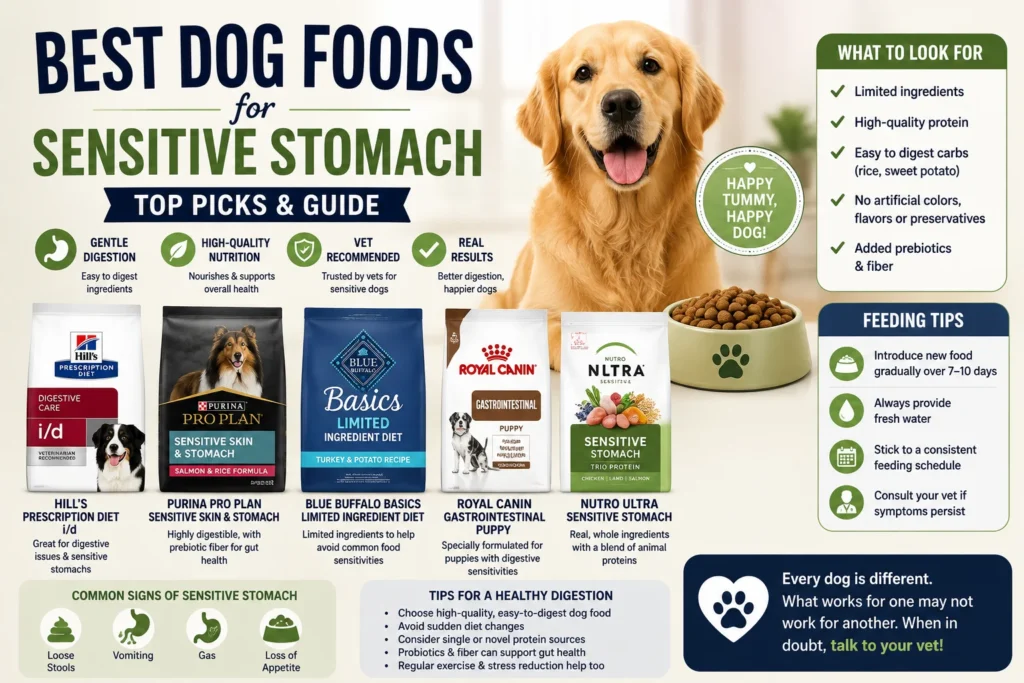

What Is a Sensitive Stomach in Dogs?
A dog with a sensitive stomach may have digestive problems after eating certain foods or changing diets. Common signs can include:- Loose stools
- Gas
- Occasional vomiting
- Reduced appetite
- Stomach discomfort
- Changes in bowel movements
Best Dog Foods for Sensitive Stomach
The best dog foods for sensitive stomach depend on your dog's individual needs, age, size, and dietary tolerance. Some types of food that may be suitable include:1. Easily Digestible Dog Food
Foods formulated with highly digestible ingredients can be easier for some dogs to tolerate. Look for formulas designed specifically for digestive health and appropriate for your dog's life stage.2. Limited-Ingredient Dog Food
Limited-ingredient formulas contain fewer major ingredients, which can make it easier to identify foods your dog may not tolerate well. These diets can be useful for dogs with suspected food sensitivities, although a veterinarian should guide an elimination diet when a true food allergy is suspected.3. Sensitive Digestion Formulas
Many pet-food companies offer formulas specifically labeled for sensitive digestion or digestive health. These products may include carefully selected protein sources, digestible carbohydrates, fiber, and other ingredients intended to support normal digestion.4. Veterinary Therapeutic Diets
Some dogs with persistent digestive problems may benefit from a veterinary therapeutic diet. These diets are formulated for specific medical needs and should be used according to veterinary guidance.Best Dog Food for Sensitive Stomach and Diarrhea
If you're searching for the best dog food for sensitive stomach and diarrhea, it's important to identify why the diarrhea is happening. Temporary diarrhea can occur after:- A sudden food change
- Eating table scraps
- Eating garbage
- Stress
- Mild dietary upset
When Diarrhea Needs Veterinary Attention
Contact a veterinarian if diarrhea:- Continues or repeatedly returns
- Contains blood
- Is accompanied by repeated vomiting
- Causes significant weakness
- Is accompanied by severe abdominal discomfort
- Results in poor appetite or refusal to drink
- Occurs in a very young, elderly, or medically fragile dog
Ingredients to Look for in Sensitive-Stomach Dog Food
When comparing foods, consider the overall nutritional formulation rather than focusing on a single ingredient.Highly Digestible Protein
A suitable protein source can be important for dogs with digestive sensitivities. Common options include chicken, turkey, fish, lamb, and other animal proteins, depending on the individual dog.Appropriate Fiber
Fiber can support normal bowel function, but the ideal amount and type depend on the dog's specific digestive needs.Digestible Carbohydrates
Some dogs may tolerate certain carbohydrate sources better than others. Rice, oats, potatoes, and other carbohydrates may appear in digestive-health formulas.Omega Fatty Acids
Some dog foods provide omega-3 and omega-6 fatty acids to support overall health and skin function.Probiotics
Certain dog foods contain probiotics or other ingredients intended to support the gut microbiome. However, not every dog needs a probiotic supplement, and products vary considerably.Ingredients to Avoid or Consider Carefully
There isn't one ingredient that every dog with a sensitive stomach must avoid. Instead, pay attention to foods that consistently trigger symptoms in your individual dog. Avoid unnecessary dietary experimentation if your dog has persistent digestive issues. You should also avoid feeding dogs:- Spoiled food
- Excessively fatty table scraps
- Foods known to be toxic to dogs
- Large amounts of treats
- Sudden diet changes
Wet vs. Dry Food for Sensitive Dogs
Both wet and dry dog food can be appropriate for dogs with sensitive digestion.Dry Food
Dry food is convenient, easy to measure, and generally simple to store. Some sensitive-digestion formulas are available as dry kibble.Wet Food
Wet food has a higher moisture content and may be easier for some dogs to eat. It can also be useful for dogs that prefer softer textures. The most important factor is whether the complete diet is nutritionally appropriate and well tolerated by your dog.How to Switch Your Dog to a New Food
Changing your dog's food too quickly can cause digestive upset, even when the new food is otherwise suitable. A gradual transition is generally recommended. You can slowly increase the amount of the new food while reducing the old food over several days. Monitor your dog for:- Diarrhea
- Vomiting
- Gas
- Reduced appetite
- Changes in stool consistency
How Much Sensitive-Stomach Food Should You Feed?
The appropriate amount depends on:- Dog's weight
- Age
- Breed or size
- Activity level
- Body condition
- Specific food
- Health status
Should You Give Treats to a Dog With a Sensitive Stomach?
Treats can make it harder to determine which food is causing digestive problems. If your dog is following a sensitive-stomach or elimination diet, ask your veterinarian which treats are appropriate. When treats are allowed, keep them limited and choose options that fit your dog's dietary plan.Best Food for Dogs With Sensitive Stomachs: What to Consider
The best food for dogs with sensitive stomachs isn't necessarily the most expensive food or the one with the longest ingredient list. Instead, consider:- Your dog's age and life stage.
- The dog's size and activity level.
- Previous reactions to foods.
- Stool quality and digestive symptoms.
- The nutritional adequacy of the food.
- Your veterinarian's recommendations.
What About Grain-Free Dog Food?
Grain-free food isn't automatically better for dogs with sensitive stomachs. Some dogs may tolerate grain-free formulas well, while others may do better with foods containing grains. The appropriate choice depends on the individual dog and the overall formulation. Don't remove an entire ingredient category without a specific reason or veterinary recommendation.When to See a Veterinarian
Digestive problems can sometimes indicate a condition that requires treatment rather than a simple food change. See a veterinarian if your dog has:- Frequent vomiting
- Persistent diarrhea
- Blood in the stool
- Significant weight loss
- Loss of appetite
- Severe lethargy
- Abdominal pain
- Signs of dehydration
- Repeated digestive problems