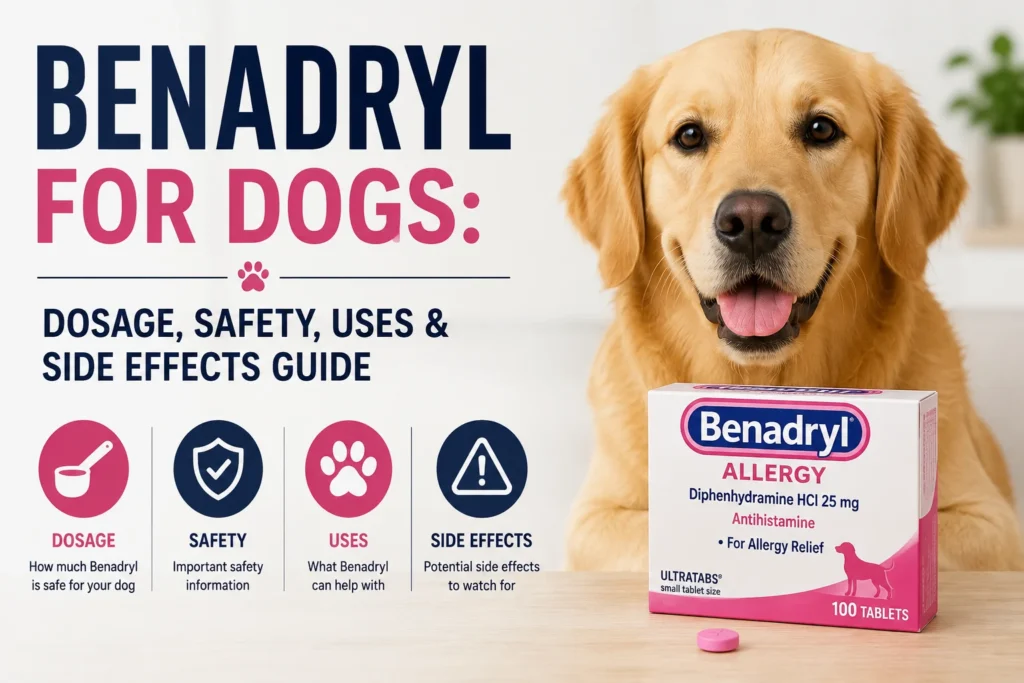
Benadryl for Dogs: Dosage, Safety, Uses & Side Effects Guide

Benadryl for dogs is a topic many pet owners research when their dog experiences itching, insect bites, or mild allergic reactions. Benadryl is the brand name for diphenhydramine, an antihistamine that veterinarians may recommend in certain situations. However, Benadryl should never be given to a dog without first consulting a licensed veterinarian. The correct treatment depends on your dog's health, age, weight, current medications, and the cause of the symptoms. If you're wondering is Benadryl safe for dogs, looking for information about Benadryl dosage for dogs, or learning about possible side effects, this guide explains the basics.

What Is Benadryl for Dogs?

Benadryl for dogs refers to the use of diphenhydramine under veterinary guidance to help manage certain allergic conditions. A veterinarian may recommend it for situations such as:
  • Mild allergic reactions
  • Seasonal allergies
  • Insect bites or stings
  • Mild itching
  • Certain vaccine reactions
  • Motion sickness in some cases
Benadryl is not appropriate for every dog or every medical condition, and serious allergic reactions require immediate emergency veterinary care.

Is Benadryl Safe for Dogs?

A common question is "Is Benadryl safe for dogs?" The answer is: It can be appropriate for some dogs when specifically recommended by a veterinarian. However, Benadryl may not be suitable for dogs that have certain medical conditions or are taking other medications. Your veterinarian will consider factors such as:
  • Overall health
  • Existing medical conditions
  • Current medications
  • Pregnancy or nursing status
  • Age
  • Breed-specific concerns
Read also;  Hollywood Feed: Stores, Hours & How to Find Hollywood Feed Near Me

Benadryl Dosage for Dogs

Many owners search for Benadryl dosage for dogs or Benadryl dose for dogs. The correct dosage must be determined by your veterinarian based on your dog's individual needs. The appropriate dose depends on:
  • Body weight
  • Age
  • Medical history
  • Reason for treatment
  • Other medications being used
Never estimate or adjust your dog's dosage yourself. Some human Benadryl products contain additional active ingredients that may be harmful to dogs. Always read labels carefully and use only products specifically approved by your veterinarian.

Possible Uses

Under veterinary supervision, Benadryl for dogs may be used to help manage:

Mild Allergies

Some dogs experience itching, sneezing, or skin irritation due to environmental allergens.

Insect Bites

Benadryl may sometimes be recommended to help reduce mild swelling or itching caused by insect bites.

Mild Vaccine Reactions

A veterinarian may occasionally recommend Benadryl before or after certain vaccinations for dogs with a history of mild allergic reactions.

Motion Sickness

Some dogs may receive diphenhydramine for motion sickness if recommended by a veterinarian.

Possible Side Effects

Like any medication, Benadryl can cause side effects. Common side effects may include:
  • Sleepiness
  • Dry mouth
  • Reduced activity
  • Mild digestive upset
Less common side effects can include:
  • Excitement or hyperactivity
  • Difficulty urinating
  • Vomiting
  • Diarrhea
Contact your veterinarian immediately if your dog develops severe or unusual symptoms after taking any medication.

When Benadryl Should Not Be Used

Benadryl may not be appropriate for dogs with certain medical conditions. Your veterinarian may advise against its use in dogs with:
  • Certain heart conditions
  • Glaucoma
  • High blood pressure
  • Certain urinary problems
  • Other significant medical conditions
Always disclose your dog's complete medical history before using any medication.

Safety Tips

If your veterinarian recommends Benadryl for dogs, remember these safety guidelines:
  • Follow the prescribed dosage exactly.
  • Never use products containing additional active ingredients unless approved.
  • Store medications safely away from pets.
  • Monitor your dog for side effects.
  • Contact your veterinarian if symptoms worsen.

Conclusion

Benadryl for dogs may help manage certain mild allergic conditions when recommended by a veterinarian, but it should never be used without professional guidance. If you're researching Benadryl dosage for dogs, Benadryl dose for dogs, or asking is Benadryl safe for dogs, the safest approach is to consult your veterinarian before giving any medication. Proper diagnosis and veterinary advice help ensure your dog receives the safest and most effective treatment.

Frequently Asked Questions (FAQs)

What is Benadryl for dogs?

Benadryl for dogs refers to the use of diphenhydramine under veterinary supervision to help manage certain allergic reactions and related conditions.

Is Benadryl safe for dogs?

Benadryl may be safe for some dogs when recommended by a veterinarian, but it is not appropriate for every pet or every situation.

What is the Benadryl dosage for dogs?

The correct Benadryl dosage for dogs depends on your dog's individual health, weight, and medical condition. Only your veterinarian should determine the proper dose.

Can puppies take Benadryl?

Puppies should only receive Benadryl if specifically instructed by a veterinarian.

What should I do if my dog has a severe allergic reaction?

Seek emergency veterinary care immediately. Benadryl should never delay treatment for serious allergic reactions.