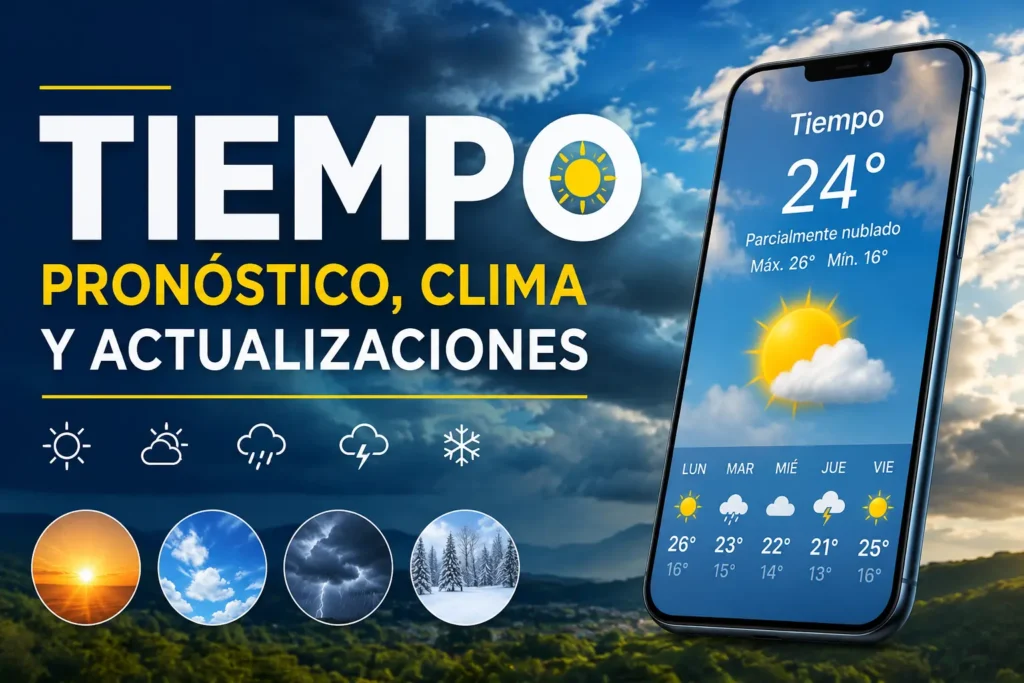

What Is Tiempo?
Tiempo is the everyday term used to describe short-term atmospheric conditions: temperature, wind, humidity, rainfall, and sunshine on any given day. Unlike climate, which describes long-term patterns over years or decades, Tiempo changes hour by hour and day by day. When someone checks the Tiempo before leaving the house, they are really asking a simple question: what will the sky do today?Pronóstico: How Weather Forecasts Are Built
A pronóstico, or forecast, is a scientific estimate of future Tiempo conditions based on current atmospheric data. Meteorologists rely on satellites, weather balloons, ocean buoys, and ground stations to collect pressure, temperature, and moisture readings. That raw data feeds into computer models that simulate how the atmosphere is likely to behave over the next several hours or days. Modern Tiempo forecasting has become remarkably precise for short time frames, though accuracy naturally drops the further out a prediction reaches. A forecast for tomorrow's Tiempo is usually far more reliable than one for ten days from now, simply because small atmospheric variables compound over time.Clima and Tiempo: Not the Same Thing
It's easy to confuse clima (climate) with Tiempo (weather), but the two describe very different timescales. Clima reflects average conditions over long periods — think of a region's typical summer heat or winter rainfall pattern. Tiempo, on the other hand, is what's actually happening outside right now or in the next few days. A useful way to remember the difference: clima tells you what to expect in general, while Tiempo tells you what to expect today. Both matter, but for daily decisions — packing an umbrella, scheduling outdoor events, or deciding whether to drive in a storm — Tiempo is the more immediately useful measure.Why Staying Updated on Tiempo Matters
Reliable Tiempo information affects far more than personal comfort. Farmers depend on accurate forecasts to time planting and harvesting. Airlines adjust flight schedules around Tiempo disruptions like fog, storms, or high winds. Emergency services use real-time Tiempo data to issue warnings ahead of hurricanes, floods, or heat waves. Even everyday commuters benefit from checking Tiempo updates before deciding how to get to work. Also Read: Best Pizza Near Me: Top Local Choices In an era of increasingly unpredictable weather patterns, having quick access to trustworthy Tiempo data has become less of a convenience and more of a necessity.Tools and Apps for Real-Time Tiempo Updates
Several reliable sources make it easy to track Tiempo conditions throughout the day:- National meteorological agencies typically offer the most accurate and localized forecasts, since they combine multiple data sources specific to a region.
- Weather apps on smartphones now provide hour-by-hour Tiempo tracking, radar maps, and severe weather alerts sent directly to your device.
- Satellite imagery websites let more advanced users visually track storm systems and cloud cover in real time.
- Voice assistants can quickly answer simple questions like "What's the Tiempo today?" without needing to open an app at all.
Tips for Planning Around Changing Tiempo
- Check the Tiempo forecast the night before and again first thing in the morning, since short-term predictions update frequently.
- Pay attention to severe weather alerts rather than just the general forecast, as these carry safety-critical information.
- Keep a few weather-ready essentials on hand — a compact umbrella, layers for sudden temperature drops, and a portable phone charger in case a storm knocks out power.
- For outdoor plans, build in a backup option in case the Tiempo shifts unexpectedly.