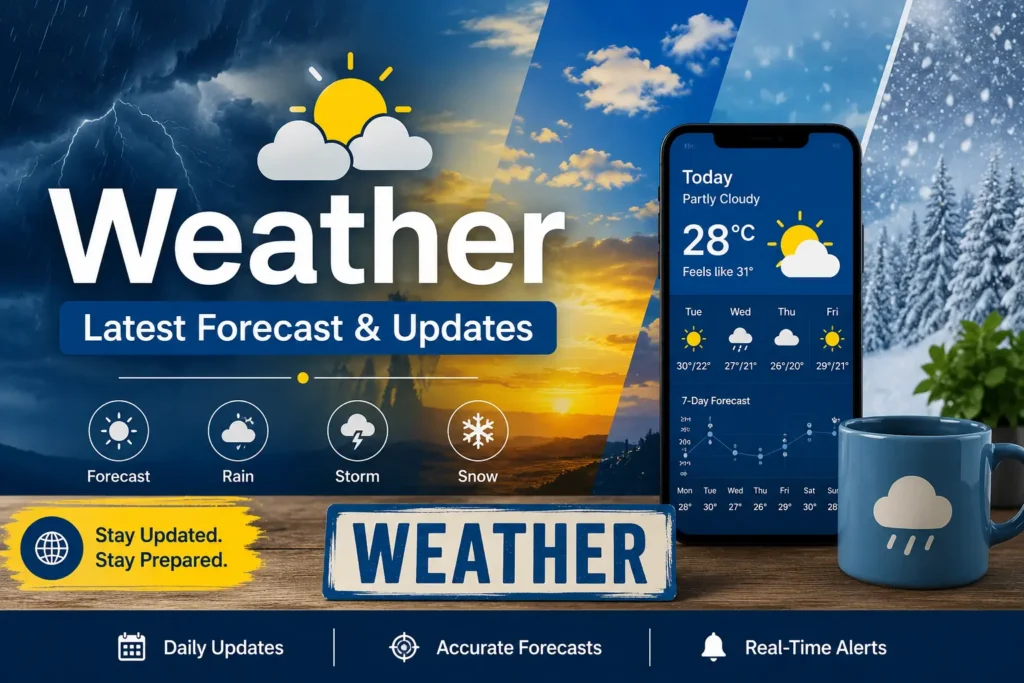
Weather affects almost every part of our daily lives. From deciding what to wear to planning a trip, outdoor activity, or work schedule, knowing the weather can help people make better decisions. Modern technology has made it easier than ever to check current conditions, daily forecasts, and upcoming changes.Understanding weather does not require advanced scientific knowledge. With basic information about temperature, rain, wind, humidity, and other conditions, anyone can understand a forecast and use it for everyday planning.
What Is Weather?
Weather describes the condition of the atmosphere at a particular place and time. It can change from hour to hour or from one day to another. Weather includes several factors, such as temperature, rainfall, wind speed, cloud cover, air pressure, and humidity.For example, a location may have sunny weather in the morning and cloudy conditions later in the day. Another area may experience heavy rain while a nearby city remains dry. These differences happen because atmospheric conditions are constantly changing.Weather is different from climate. Weather refers to short-term atmospheric conditions, while climate describes typical weather patterns over a much longer period.
Why Weather Forecasts Are Important
Weather forecasts provide useful information about expected atmospheric conditions. People can use these forecasts to prepare for changes and plan their activities.A weather forecast can help you decide whether you need an umbrella, jacket, sunscreen, or other items before leaving home. Businesses also depend on forecasts for transportation, construction, agriculture, tourism, and many other activities.Farmers, for example, monitor forecasts to understand the possibility of rainfall, extreme temperatures, or strong winds. Travelers can check expected conditions before planning journeys. Outdoor event organizers may also use forecasts to reduce the risk of disruptions caused by severe conditions.
How Weather Forecasting Works
Weather forecasting involves collecting and analyzing information about the atmosphere. Meteorologists use observations from weather stations, satellites, radar systems, aircraft, and other technologies.Weather stations measure conditions such as temperature, humidity, wind, and atmospheric pressure. Satellites provide large-scale information about clouds, storms, and atmospheric systems. Radar can help meteorologists monitor precipitation and track developing storms.This information is processed using computer models. These models examine atmospheric conditions and calculate how they may change over time. Meteorologists then study the results and prepare forecasts for different locations.Because the atmosphere is complex, forecasts can sometimes change. A forecast several days in advance may be less certain than a forecast for the next few hours.
Main Elements of Weather
Several important elements are used to describe weather conditions.Temperature is one of the most commonly checked measurements. It tells us how hot or cold the air is. Temperature can influence clothing choices, outdoor activities, energy consumption, and health precautions.Rainfall describes the amount of precipitation received in an area. Rain can range from light showers to heavy downpours. Forecasts often provide a chance of rain to help people understand the possibility of precipitation.Wind describes the movement of air. Wind speed and direction can be important for aviation, boating, construction, agriculture, and outdoor activities.Humidity refers to the amount of moisture in the air. High humidity can make warm conditions feel hotter, while low humidity can make the air feel dry.Cloud cover describes how much of the sky is covered by clouds. Cloudy conditions can affect sunlight, temperature, and the possibility of rain.
Daily Weather Forecasts
A daily weather forecast gives information about expected conditions throughout the day. It may include the expected high and low temperature, chance of precipitation, wind conditions, and general sky conditions.Many weather services also provide hourly forecasts. Hourly information can be particularly useful when planning outdoor activities. For example, someone may check whether rain is expected during the afternoon before arranging an outdoor event.Also Read: Food Near Me: Best Places to EatDaily forecasts are generally easier to use when they are presented in a simple format. Users can quickly compare morning, afternoon, and evening conditions before making plans.
Weather Changes and Severe Conditions
Weather can sometimes change quickly. Strong storms, heavy rainfall, extreme heat, snow, or high winds can create difficult conditions for communities.Severe weather warnings are designed to provide information about potentially dangerous conditions. When a warning is issued, people should follow guidance from reliable local authorities and emergency organizations.Preparing for severe weather can include keeping emergency supplies available, protecting important property, avoiding unnecessary travel, and staying informed through trusted information sources.
Weather and Everyday Life
Weather has a direct influence on everyday routines. People often check the forecast before going to work, school, shopping, or traveling.Transportation systems can also be affected by weather. Heavy rain can reduce visibility and make roads slippery. Strong winds can affect flights and other forms of transportation. Snow and ice may create additional challenges in colder regions.Weather can also influence energy use. Very hot days may increase demand for air conditioning, while cold periods can increase the need for heating.
Weather and Agriculture
Agriculture is strongly connected to atmospheric conditions. Crops need suitable temperatures, water, and sunlight to grow properly.Farmers monitor weather information when planning planting, irrigation, harvesting, and other activities. Too much rain can damage crops, while long periods without sufficient rainfall can create drought conditions.Accurate forecasts can help farmers make better decisions and reduce potential losses caused by unexpected conditions.
Using Weather Information Effectively
There are many ways to get weather information today. Weather websites, smartphone applications, television broadcasts, and digital assistants can provide current conditions and forecasts.When checking a forecast, it is useful to look at more than just temperature. Rain probability, wind speed, humidity, and weather warnings can provide a more complete picture.It is also important to check the forecast regularly when planning something several days ahead. Atmospheric conditions can change, and forecasts may be updated as new information becomes available.
The Future of Weather Forecasting
Technology continues to improve weather forecasting. More powerful computers, advanced satellites, improved radar systems, and better forecasting models are helping meteorologists understand atmospheric patterns.Artificial intelligence and machine learning are also being explored for weather-related applications. These technologies can help analyze large amounts of atmospheric data and identify patterns that may improve forecasting.Although forecasting will never be perfect, continued improvements can provide people with more useful and timely information.
Conclusion
Weather is an important part of everyday life, influencing travel, agriculture, transportation, outdoor activities, and many other areas. Understanding basic weather information can help people make informed decisions and prepare for changing conditions.By checking reliable forecasts and paying attention to temperature, rainfall, wind, humidity, and severe weather warnings, people can better understand what to expect. As technology continues to advance, weather forecasting is likely to become even more useful and accurate for communities around the world.
Author
Steven Mark
Creators
Exploring ideas, trends, and real-world stories to inspire fresh thinking, support daily learning, and help you discover something valuable every day.