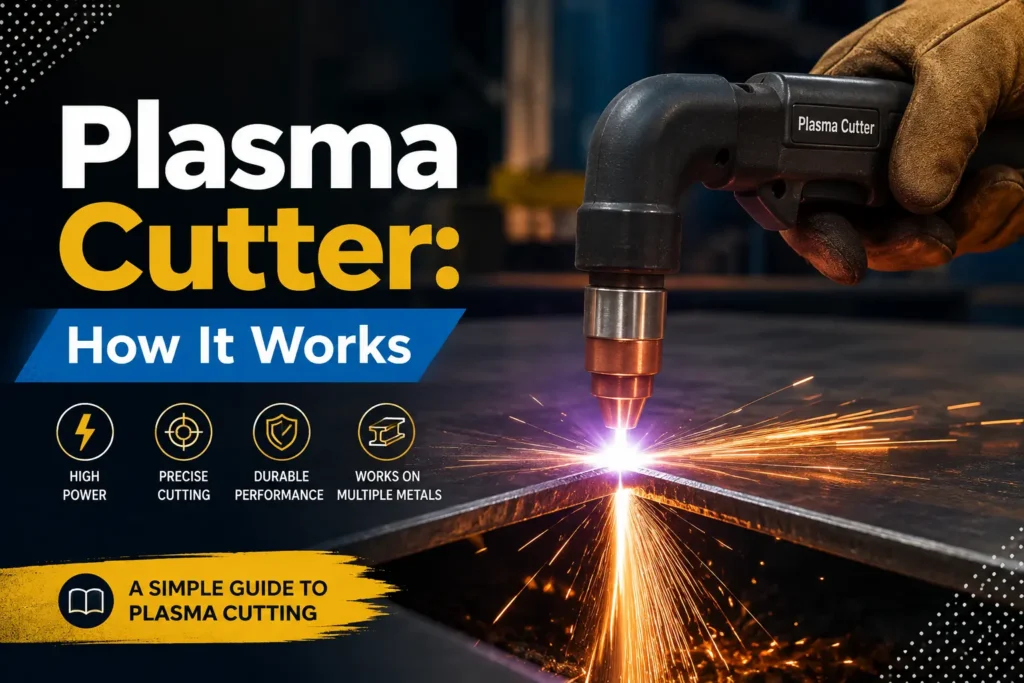
A plasma cutter is a powerful cutting tool used to cut electrically conductive metals quickly and accurately. It works by creating a high-temperature plasma arc that melts the metal and blows the molten material away. From workshops and construction sites to automotive repair and metal fabrication, the plasma cutter has become an important tool for working with metal.Understanding how a plasma cutter works can help you choose the right machine, use it properly, and get better cutting results. This guide explains the basic working principle, main parts, common uses, advantages, limitations, and important safety considerations.
What Is a Plasma Cutter?
A plasma cutter is a machine designed to cut conductive metals such as steel, stainless steel, aluminum, copper, and brass. Unlike traditional cutting methods that rely mainly on mechanical force, a plasma cutter uses electricity and compressed gas to create an extremely hot cutting arc.The process begins when an electrical current passes through a gas inside the torch. The gas becomes ionized and turns into plasma. This plasma reaches a very high temperature, allowing it to melt metal along a narrow cutting path.Because the process is fast and produces a relatively narrow cut, plasma cutting is widely used for both professional fabrication and many repair applications.
How Does a Plasma Cutter Work?
The working process of a plasma cutter involves several important steps. Although different machines have different designs, the basic principle is similar.
Creating the Plasma Arc
When the operator activates the torch, compressed gas flows through a small nozzle. An electrical arc is created between the electrode and the metal being cut.The electrical energy heats and ionizes the gas, turning it into plasma. The small nozzle focuses this plasma into a concentrated stream that can melt metal efficiently.
Melting and Removing the Metal
The intense heat of the plasma stream melts the metal at the cutting point. At the same time, the high-speed gas flow pushes the molten metal away from the cut.As the torch moves across the material, this process continues and creates a cut through the metal. The speed and quality of the cut depend on factors such as material thickness, machine power, gas flow, and cutting speed.
Main Parts of a Plasma Cutter
A plasma cutter consists of several components that work together to produce the cutting arc.
Power Supply
The power supply provides the electrical energy needed to create and maintain the plasma arc. Machines with higher power ratings can generally handle thicker materials.
Plasma Torch
The torch directs the plasma toward the metal. It normally contains an electrode, nozzle, and other components designed to control the plasma stream.
Electrode and Nozzle
The electrode helps create the electrical arc, while the nozzle focuses the plasma stream. These parts experience wear over time and may need to be replaced.
Air or Gas Supply
Many plasma cutters use compressed air, while some industrial systems use other gases depending on the material and desired cutting characteristics. The gas helps create the plasma and remove molten metal from the cut.
Common Uses of a Plasma Cutter
Plasma cutters are used in many industries because they can cut different types of conductive metal efficiently.In automotive repair, they can be used for cutting body panels, brackets, exhaust components, and other metal parts. Metal fabrication shops use them to prepare materials for welding and create custom shapes.Construction and maintenance workers may also use plasma cutters for cutting metal sheets, pipes, plates, and structural components. Hobbyists and makers often use smaller machines for DIY metalworking projects.Also Read:What Is Monolithic? A Simple GuideComputer-controlled plasma cutting systems are also used in manufacturing. These machines can follow digital designs to produce repeated and precise cuts.
Advantages of Using a Plasma Cutter
One of the biggest advantages of a plasma cutter is cutting speed. For many metal-cutting jobs, it can work faster than several traditional methods.Another benefit is versatility. A single machine can often cut different conductive metals, making it useful in workshops where various materials are handled.Plasma cutting can also produce relatively narrow cuts with less mechanical force on the material. This makes it useful for cutting shapes and patterns that would be difficult to produce with some conventional tools.Modern plasma cutters are available in compact designs, making them easier to transport and suitable for smaller workshops as well as professional environments.
Limitations of Plasma Cutting
Despite its advantages, a plasma cutter is not suitable for every situation. It can only cut electrically conductive materials, so materials such as wood, plastic, and ordinary glass cannot be cut using a standard plasma cutting process.Cutting very thick metal may also require a powerful industrial machine. Smaller machines have limits on the thickness they can cut effectively.The cutting process can produce sparks, bright light, smoke, and noise. This means proper ventilation and protective equipment are essential. Consumable parts such as electrodes and nozzles also require regular inspection and replacement.
How to Choose the Right Plasma Cutter
Choosing the right plasma cutter depends largely on the type and thickness of metal you plan to cut. Start by checking the machine's recommended cutting capacity and compare it with your typical materials.Consider the machine's amperage, duty cycle, power requirements, air supply, portability, and available replacement parts. If you need to make detailed or repeated cuts, you may also want to consider a machine designed for CNC or computer-controlled operation.For occasional repair work, a compact unit may be sufficient. Professional fabrication work may require a higher-powered machine with greater duty capacity and more advanced controls.
Plasma Cutter Safety
Safety should always be a priority when operating a plasma cutter. The process produces intense heat, sparks, ultraviolet light, fumes, and electrical hazards.Wear appropriate eye and face protection, flame-resistant clothing, gloves, and suitable footwear. Keep flammable materials away from the cutting area and make sure the workspace has adequate ventilation.Always follow the manufacturer's operating instructions and inspect the torch, cables, air supply, and consumable components before use. Proper grounding and electrical connections are also important for safe operation.
Final Thoughts
A plasma cutter is an efficient and versatile tool for cutting electrically conductive metals. By using an electrical arc, ionized gas, and concentrated heat, it can melt and remove metal quickly while producing controlled cuts.Whether used in automotive repair, construction, fabrication, manufacturing, or DIY projects, understanding how a plasma cutter works makes it easier to select the right machine and operate it responsibly. With proper equipment, maintenance, and safety practices, plasma cutting can be a valuable part of modern metalworking.
Author
Steven Mark
Creators
Exploring ideas, trends, and real-world stories to inspire fresh thinking, support daily learning, and help you discover something valuable every day.