A rack and pinion is one of the simplest yet most effective mechanical systems used to convert rotational motion into linear motion. You will find this mechanism in everyday machines, from the steering system of your car to industrial equipment on factory floors. Understanding how a rack and pinion works can help you appreciate the engineering behind many tools and vehicles you use regularly.In this article, we will explore what a rack and pinion is, how it functions, the different types available, and why it remains a popular choice across many industries.
What Is a Rack and Pinion?
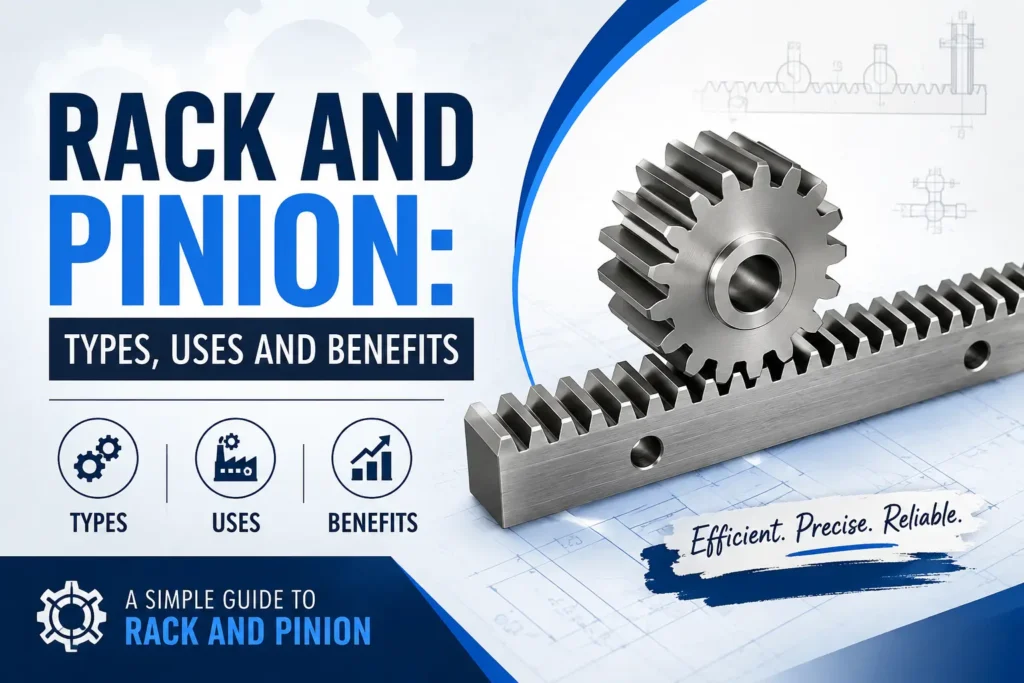
A rack and pinion consists of two main parts: a flat, toothed bar called the rack, and a circular gear called the pinion. The pinion is a small gear with teeth that mesh perfectly with the teeth on the rack.When the pinion rotates, it moves along the rack, or the rack moves relative to the pinion, depending on which part is fixed. This simple interaction converts rotary motion into straight-line movement, making the rack and pinion a valuable tool in many mechanical applications.
The Basic Components
The rack is essentially a straight bar with teeth cut into one side. The pinion is a small, round gear designed to fit precisely into those teeth.Together, these two parts create a reliable and efficient way to transfer motion. The design is straightforward, which is part of why it has remained popular for so long in mechanical engineering.
How Does a Rack and Pinion Work?
The working principle behind a rack and pinion system is fairly easy to understand. As the pinion gear turns, its teeth engage with the teeth on the rack, pushing or pulling the rack in a straight line.This means that rotational force applied to the pinion, often from a steering wheel or a motor, gets translated into linear movement. The direction of the rack's movement depends on which way the pinion rotates.This mechanism works in reverse as well. If the rack moves, it can cause the pinion to rotate, which is useful in certain measuring and positioning applications.
Why This Motion Conversion Matters
Many machines require a way to change rotational energy into straight-line motion, and the rack and pinion offers a mechanically simple solution. It avoids the need for more complicated systems like hydraulics or belts in situations where precise, direct movement is needed.This is one of the main reasons rack and pinion mechanisms remain common in various industries, despite the availability of more advanced technologies.
Types of Rack and Pinion Systems
Not all rack and pinion systems are the same. Depending on the application, manufacturers use different designs to meet specific performance needs.
Standard Rack and Pinion
This is the most common type, typically used in steering systems and general machinery. It features straight-cut teeth and provides smooth, direct motion transfer.
Helical Rack and Pinion
Helical designs use angled teeth instead of straight ones. This allows for quieter operation and can handle higher loads, making it a good choice for industrial machinery that requires durability and reduced noise.
Rack and Pinion with Preloading
Some systems include a preloading feature that removes backlash, which is the small amount of looseness between the gear teeth. This type is used in applications requiring high precision, such as CNC machines and robotics.
Circular Rack and Pinion
While less common, circular racks are used in specialized applications where curved movement combined with rotational input is needed rather than a purely straight motion.
Common Uses of Rack and Pinion Systems
The versatility of rack and pinion systems means they appear in many different fields.
Automotive Steering Systems
One of the most well-known uses is in vehicle steering. When you turn the steering wheel, it rotates a pinion gear connected to a rack, which moves the vehicle's wheels left or right. This design offers a direct and responsive steering feel.
Industrial Machinery
Factories often use rack and pinion systems in conveyor belts, cutting machines, and automated equipment. The mechanism allows precise control over linear movement, which is essential for manufacturing processes.
CNC Machines and Robotics
In computer-controlled machines, accuracy is critical. Rack and pinion systems help move parts of the machine along a fixed path with high precision, supporting tasks like cutting, engraving, and assembly.Also Read: Odometer: How It Works and Why It Matters
Elevators and Lifts
Some elevator systems, particularly in construction sites, use rack and pinion mechanisms to move platforms vertically in a controlled and secure manner.
Railway and Mountain Transportation
Certain railway systems, especially those built on steep inclines, use rack and pinion technology to help trains grip the track securely and climb slopes that would otherwise be too steep for standard wheels.
Benefits of Rack and Pinion Systems
There are several reasons why engineers and manufacturers continue to rely on rack and pinion designs.First, the mechanism is mechanically simple, which often makes it more affordable to produce and maintain compared to more complex alternatives. Fewer parts generally mean fewer things that can go wrong.Second, it offers direct and responsive motion. Because the rack and pinion transmits force directly, there is minimal delay between input and output movement, which is especially valuable in steering applications.Third, rack and pinion systems are compact. Their design does not require much space, making them suitable for applications where size and weight are important considerations.Finally, these systems tend to be durable when properly maintained, especially when made from high-quality materials suited to their specific application.
Limitations to Consider
While rack and pinion systems offer many advantages, they are not without limitations. Over time, wear on the gear teeth can lead to backlash, reducing precision unless the system is designed to compensate for it.Additionally, standard rack and pinion systems are best suited for applications requiring linear motion over a limited distance, since the length of the rack determines how far the mechanism can travel. For very long distances, other mechanical solutions might be more practical.Regular maintenance, including lubrication and inspection, is also necessary to ensure smooth operation and to prevent premature wear.
Final Thoughts
The rack and pinion mechanism remains an essential part of modern engineering because of its simplicity, reliability, and effectiveness. Whether used in the steering system of a car, industrial machinery, or precision robotics, this mechanical system continues to prove its value across countless applications.Understanding the different types, uses, and benefits of a rack and pinion can help you appreciate the engineering choices behind many machines you interact with daily. As technology continues to advance, this time-tested mechanism is likely to remain a dependable solution for converting rotational motion into precise linear movement.
Author
Steven Mark
Creators
Exploring ideas, trends, and real-world stories to inspire fresh thinking, support daily learning, and help you discover something valuable every day.