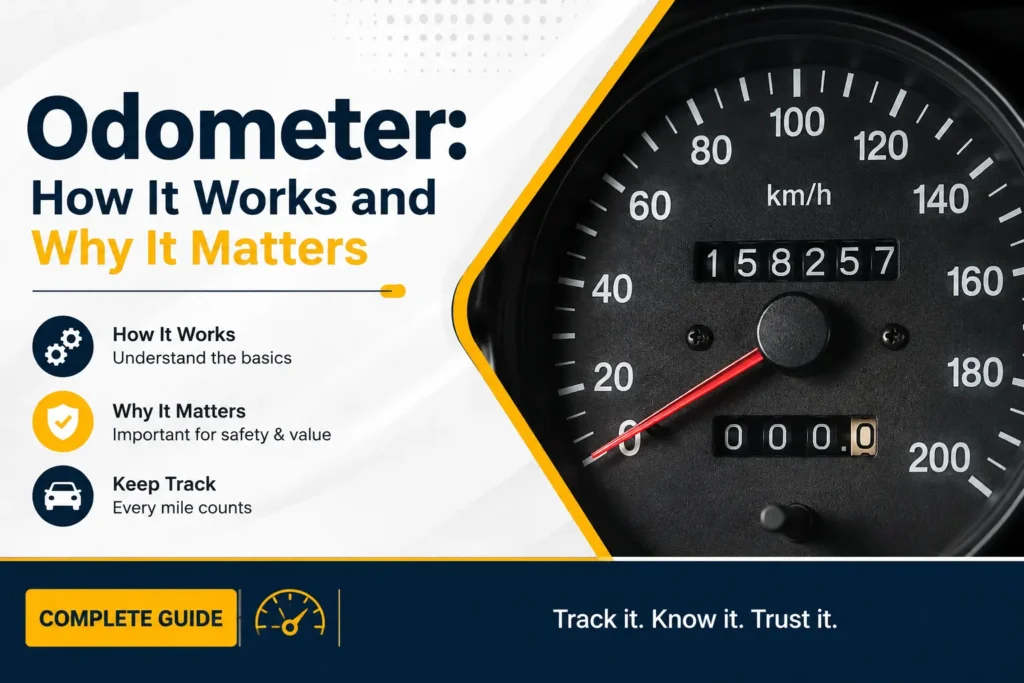
Every vehicle you have ever driven or ridden in has one small device quietly keeping track of how far it has traveled. That device is the odometer, and while most people glance at it without a second thought, it plays a far bigger role than simply displaying a number on the dashboard.Understanding how an odometer works can help you make smarter decisions when buying a car, maintaining one, or even selling it. This guide breaks down everything you need to know about this everyday but essential piece of automotive technology.
What Is an Odometer?
An odometer is a device that measures and displays the total distance a vehicle has traveled since it was manufactured. It is usually located on the dashboard, right next to the speedometer, and shows the reading in miles or kilometers depending on the region.Unlike a trip meter, which can be reset to track individual journeys, the main odometer reading is permanent. It continues to add up throughout the vehicle's entire lifespan, giving owners and buyers a clear picture of overall usage.
Why the Odometer Reading Matters
The number displayed on an odometer is one of the most important indicators of a vehicle's condition and history. A lower reading generally suggests less wear on the engine, transmission, and other mechanical parts, while a higher reading often means more use over time.Buyers, sellers, mechanics, and insurance companies all rely on this figure to make informed decisions about pricing, maintenance schedules, and vehicle value.
How Does an Odometer Work?
The basic function of an odometer is fairly simple: it counts the rotations of the vehicle's wheels or transmission and converts that number into a distance measurement. However, the technology behind this process has evolved significantly over the decades.
Mechanical Odometers
Older vehicles used mechanical odometers, which relied on a physical cable connected to the transmission. As the wheels turned, the cable spun a series of gears inside the odometer unit, and these gears rotated small numbered wheels to display the distance traveled.This system was reliable for its time, but it also made mechanical odometers relatively easy to tamper with. Rolling back the numbers involved simply reversing the gears, something that unfortunately happened often enough to become a real concern for used car buyers.
Digital Odometers
Modern vehicles use digital odometers, which work very differently. Instead of mechanical gears, sensors detect wheel rotation or transmission output and send that data to the vehicle's onboard computer.The computer calculates the distance traveled and stores the information electronically, often in multiple locations within the car's systems. This makes digital odometers far more accurate and significantly harder to manipulate compared to their mechanical predecessors.
GPS and Hybrid Tracking
Some newer vehicles now combine traditional odometer sensors with GPS-based distance tracking for added accuracy. This hybrid approach helps cross-check mileage data and can be useful for fleet management, insurance tracking, and usage-based driving programs.
Common Uses of an Odometer
The odometer serves several practical purposes beyond simply showing curiosity-driven numbers. Understanding these uses helps explain why accurate readings matter so much.Vehicle maintenance scheduling depends heavily on mileage, since services like oil changes, tire rotations, and timing belt replacements are usually tied to specific distance intervals. Buying and selling used cars also relies on the odometer, as mileage is one of the first things buyers check to estimate a vehicle's remaining lifespan and fair market value.Insurance calculations often factor in annual mileage, since vehicles driven more frequently may carry higher risk profiles. Fleet and business tracking is another common use, allowing companies that manage multiple vehicles to monitor usage, plan maintenance, and calculate operating costs accurately.Also Read: What Is an Autopen? A Simple Guide
Benefits of a Reliable Odometer
A properly functioning odometer offers real advantages to everyday drivers and vehicle owners. It provides transparency, giving both buyers and sellers confidence that the reported mileage matches the vehicle's actual use.It also supports better maintenance planning, since accurate mileage tracking helps you know exactly when your car needs servicing. Additionally, a trustworthy odometer reading is essential for accurate vehicle valuation when it comes time to trade in or sell a car, and it can even assist with fuel efficiency tracking by helping drivers calculate miles per gallon over time.
Limitations and Things to Watch For
While odometers are generally reliable, they are not without limitations. Older mechanical systems, in particular, are vulnerable to tampering, a practice known as odometer rollback or odometer fraud. This involves altering the displayed mileage to make a vehicle appear less used than it actually is.Digital odometers reduce this risk significantly, but they are not entirely immune to manipulation through sophisticated tools. For this reason, it is wise for used car buyers to request a vehicle history report, which cross-references mileage data recorded during past inspections, services, and ownership changes.It is also worth noting that a damaged sensor or electrical fault can occasionally cause inaccurate readings, so if a mileage figure looks inconsistent with a vehicle's overall condition, it is a good idea to have a mechanic inspect the system.
Tips for Verifying Odometer Accuracy
Checking a few key details can help confirm whether an odometer reading is trustworthy. Compare the mileage to the general wear on the pedals, steering wheel, and seats, since a low reading paired with heavy wear may signal a problem.Review maintenance records and past inspection reports, as these often list mileage at the time of service. Requesting a vehicle history report from a trusted provider is another effective way to confirm consistency over the vehicle's lifetime.
Conclusion
The odometer may seem like a simple gauge on your dashboard, but it plays a vital role in vehicle ownership, maintenance, and value assessment. From its early mechanical origins to today's digital and GPS-enhanced systems, the odometer has evolved to provide more accurate and tamper-resistant readings than ever before.Whether you are maintaining your current vehicle or shopping for a used one, understanding how an odometer works, and knowing what to watch out for, can help you make smarter, more informed decisions. A little awareness goes a long way in ensuring the number on that dashboard truly reflects the story of the vehicle behind it.
Author
Steven Mark
Creators
Exploring ideas, trends, and real-world stories to inspire fresh thinking, support daily learning, and help you discover something valuable every day.