
Understanding the Basics
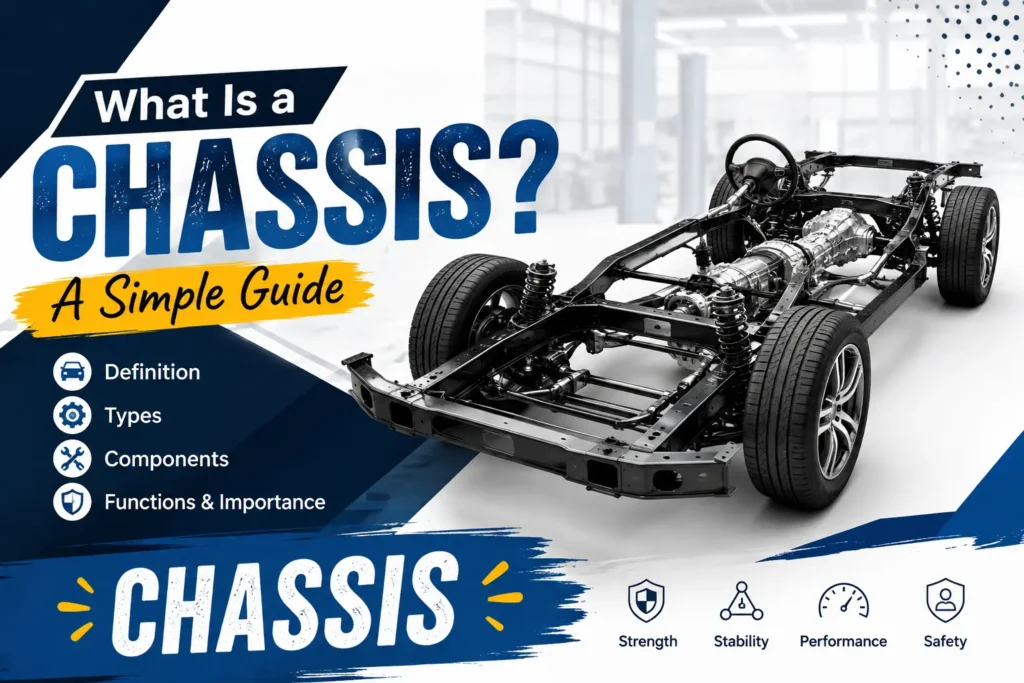
A chassis is the internal framework of a vehicle that supports its weight and holds all the major components together. Think of it as the skeleton of a car, truck, or motorcycle. Just like the human skeleton supports muscles, organs, and skin, a chassis supports the engine, transmission, suspension, wheels, and body of the vehicle. Without a strong chassis, a vehicle would not be able to handle the stress of daily driving, sudden braking, sharp turns, or rough roads. The chassis is designed to absorb shocks, distribute weight evenly, and keep the vehicle stable at all times.Why Is a Chassis Important?
The chassis plays a central role in vehicle safety, comfort, and performance. Here are a few reasons why it matters so much:- Structural Support – The chassis holds the engine, gearbox, axles, and body in place. Every other part of the vehicle is mounted directly or indirectly on the chassis.
- Safety – In case of an accident, a well-built chassis absorbs impact energy and protects passengers by reducing the force transferred to the cabin.
- Stability – The chassis keeps the vehicle balanced during turns, braking, and acceleration, which improves handling.
- Load Distribution – A good chassis design spreads the weight of passengers and cargo evenly across the vehicle, preventing unnecessary strain on any single point.
- Durability – Since the chassis carries the entire load of the vehicle, its strength directly affects how long the vehicle lasts.
Types of Chassis
There are several types of chassis used in the automotive industry, each designed for different purposes.1. Ladder Chassis
This is one of the oldest and simplest designs. It looks like a ladder, with two long rails connected by cross members. Ladder chassis are strong, easy to manufacture, and commonly used in trucks, pickups, and SUVs because they can handle heavy loads.2. Monocoque Chassis
In this design, the body and the chassis are combined into a single structure. This type is lightweight, offers better fuel efficiency, and is widely used in modern passenger cars. Most sedans and hatchbacks today use a monocoque chassis.3. Backbone Chassis
This design uses a single strong tube-like structure running through the center of the vehicle, connecting the front and rear axles. It is often used in sports cars because it provides good strength with less weight. Alos Read: What Is FET? Features, Types and Uses4. Space Frame Chassis
A space frame chassis is made up of multiple small tubes welded together to form a three-dimensional framework. It is very strong and lightweight, which is why it is popular in racing cars and high-performance vehicles.5. Tubular Chassis
Similar to the space frame, the tubular chassis uses a network of tubes instead of flat panels. It offers excellent strength-to-weight ratio and is often seen in custom-built and off-road vehicles.Materials Used in Chassis Construction
The material used to build a chassis affects its weight, strength, and cost. Common materials include:- Steel – Strong, affordable, and widely used, but heavier compared to other materials.
- Aluminum – Lighter than steel and resistant to rust, often used in premium and performance vehicles.
- Carbon Fiber – Extremely light and strong, mostly used in high-end sports cars and racing vehicles due to its high cost.
- Fiberglass – Occasionally used in specialty vehicles for its light weight and moldability.
Chassis and Vehicle Performance
The design and quality of a chassis directly impact how a vehicle performs on the road. A stiffer chassis reduces flex during cornering, which improves handling and driver confidence. A lighter chassis improves acceleration and fuel economy. This is why sports car manufacturers invest heavily in advanced chassis technology, using materials like carbon fiber and aluminum to keep the car light yet rigid. On the other hand, trucks and heavy vehicles need a chassis that can handle large loads without bending or breaking, which is why ladder chassis remain popular in this segment.How to Maintain a Healthy Chassis
Although the chassis is built to last, it still requires care to avoid long-term damage. Here are a few maintenance tips:- Avoid driving over potholes and rough terrain at high speed.
- Get regular inspections done, especially after long trips or accidents.
- Keep the chassis clean and free from rust, especially in areas with humid or salty conditions.
- Address any unusual noises or vibrations immediately, as they can indicate chassis damage.