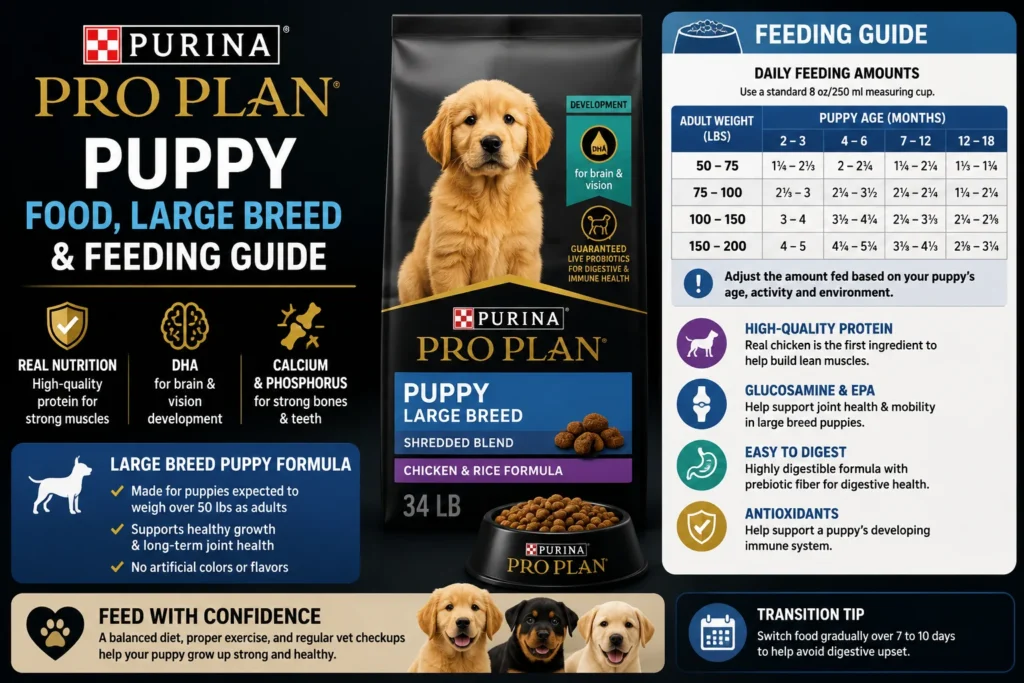

What Is Purina Pro Plan Puppy Food?
Purina Pro Plan puppy food is a range of dog foods formulated for growing puppies. Puppies have different nutritional requirements from adult dogs because they are developing rapidly. A suitable puppy food should provide appropriate levels of protein, fat, vitamins, minerals, and other nutrients needed during growth. Purina Pro Plan offers different puppy formulas, so the exact ingredients and nutritional profile depend on the specific product. When choosing a formula, consider your puppy's:- Age
- Expected adult size
- Breed
- Activity level
- Individual nutritional needs
- Veterinarian's recommendations
Purina Pro Plan Puppy Food: Key Features
Different Purina Pro Plan puppy food formulas can vary, but puppy recipes are generally designed around the nutritional needs of growing dogs. Depending on the formula, features may include:- High-quality protein sources
- Nutrients for growing muscles
- DHA for brain and vision development
- Antioxidants to support developing immune systems
- Appropriate levels of calcium and phosphorus
- Vitamins and minerals
- Ingredients designed for puppy digestion
Purina Pro Plan Large Breed Puppy
A Purina Pro Plan large breed puppy formula is designed for puppies expected to reach a larger adult size. Large-breed puppies have particular growth considerations. Feeding them an appropriate large-breed puppy diet can help provide controlled nutrition during development. Large-breed puppy formulas may focus on:- Appropriate calorie levels
- Protein for muscle development
- Calcium and phosphorus balance
- Nutrients supporting developing bones
- DHA for brain and vision development
- Antioxidants for immune support
Purina Pro Plan Large Breed Puppy Food
When searching for Purina Pro Plan large breed puppy food, look for the specific product that is labeled for large-breed growth. Not every Purina Pro Plan puppy formula is designed for large breeds. Large-breed puppies can include breeds such as:- Labrador Retrievers
- German Shepherds
- Golden Retrievers
- Rottweilers
- Great Danes
- Mastiffs
Purina Pro Plan Puppy Large Breed vs. Regular Formula
One of the most important differences between standard puppy food and Purina Pro Plan puppy large breed formulas is the nutritional design for different growth patterns. Large-breed puppies generally need carefully controlled nutrition as they grow. A regular puppy formula may be appropriate for puppies expected to remain smaller, while a large-breed formula is specifically designed for puppies expected to reach a larger adult size. If you're unsure which category your puppy falls into, ask your veterinarian.Key Nutrients for Growing Puppies
Puppies need a variety of nutrients during development.Protein
Protein provides amino acids needed for muscle development and normal body functions. Growing puppies generally have higher nutritional demands than adult dogs.DHA
DHA is an omega-3 fatty acid associated with brain and vision development. Some puppy formulas include DHA as part of their nutritional profile.Calcium and Phosphorus
Calcium and phosphorus are important minerals for developing bones and teeth. The balance and amount are particularly important for growing puppies, especially large breeds.Fat
Dietary fat provides concentrated energy and supplies essential fatty acids. The appropriate amount depends on the puppy's growth stage and overall diet.Vitamins and Minerals
Complete puppy foods provide vitamins and minerals that support normal growth and body functions.How Much Purina Pro Plan Puppy Food Should You Feed?
The appropriate amount of Purina Pro Plan puppy food depends on several factors, including:- Puppy age
- Current weight
- Expected adult weight
- Breed or size
- Activity level
- Specific formula
- Body condition
Feeding a Large Breed Puppy
Large-breed puppies require particular attention to feeding. Avoid assuming that giving more food will make a puppy healthier or help it grow better. Rapid growth isn't necessarily desirable for large breeds. Instead:- Choose food specifically formulated for large-breed growth.
- Follow the package feeding guidelines.
- Measure portions accurately.
- Monitor your puppy's body condition.
- Adjust feeding as your puppy grows.
- Consult your veterinarian regularly.
How Often Should Puppies Eat?
Young puppies generally need more frequent meals than adult dogs. The exact schedule depends on age and individual circumstances. A general routine may involve dividing the daily food allowance into several meals. As puppies mature, the number of daily meals can gradually change. Follow your veterinarian's advice and the feeding recommendations for the specific food you're using.Dry vs. Wet Puppy Food
Puppy food can come in different forms, including dry and wet options.Dry Puppy Food
Dry food is convenient, easy to measure, and simple to store. It can also be useful for maintaining a consistent feeding routine.Wet Puppy Food
Wet food generally contains more moisture and can be appealing to puppies that prefer a softer texture. Some owners use wet food alone, while others combine wet and dry food. If combining foods, account for the calories from both products rather than feeding the full recommended amount of each.How to Transition Your Puppy to Purina Pro Plan
Changing your puppy's food suddenly can sometimes cause digestive upset. A gradual transition is generally preferable. You can gradually increase the amount of the new food while reducing the old food over several days. Watch your puppy for:- Loose stool
- Vomiting
- Reduced appetite
- Excessive gas
- Changes in energy