
What Is a Mold Inspection?
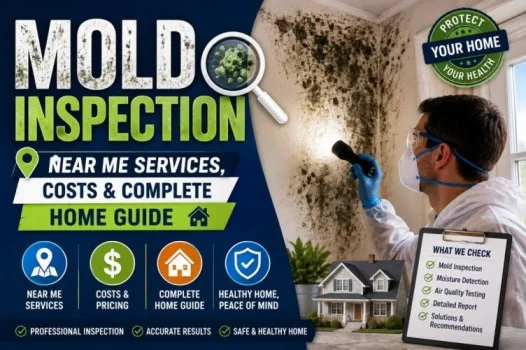
A mold inspection is a professional evaluation of your property to determine whether mold is present and to identify the moisture source causing it. Unlike simple visual checks, professional inspectors use specialized tools to detect hidden mold in places that are difficult to access. A standard inspection typically includes:- Visual examination
- Moisture meter readings
- Thermal imaging (when necessary)
- Humidity measurements
- Air quality testing (optional)
- Surface sampling if required
- Detailed inspection report
Signs You Need a Mold Inspection
Consider scheduling an inspection if you notice:- Musty or earthy odors
- Water stains on ceilings or walls
- Recent flooding or plumbing leaks
- High indoor humidity
- Visible mold spots
- Allergies that worsen indoors
- Condensation around windows
- Damp basement or crawl space
Mold Inspection Near Me: What to Look For
When searching for mold inspection near me, choose companies that offer:- Certified inspectors
- Moisture detection equipment
- Written inspection reports
- Transparent pricing
- Experience with residential and commercial properties
- Positive customer reviews
- Independent testing (when needed)
What Do Mold Inspection Services Include?
Professional mold inspection services usually include:Visual Inspection
Inspectors examine walls, ceilings, flooring, bathrooms, kitchens, basements, attics, and crawl spaces.Moisture Detection
Specialized meters identify moisture hidden inside building materials.Thermal Imaging
Infrared cameras help locate moisture behind walls without damaging your home.Air Sampling
Indoor air samples may be collected to measure airborne mold spores.Surface Testing
Samples are taken from suspicious areas and analyzed in a laboratory when necessary.Inspection Report
Most companies provide a detailed report including:- Areas inspected
- Moisture findings
- Mold locations
- Laboratory results (if applicable)
- Recommended next steps
Crawl Space Mold Inspection
A crawl space mold inspection is especially important because crawl spaces often trap moisture. Common causes include:- Poor ventilation
- Plumbing leaks
- Standing water
- Foundation cracks
- High humidity
- Floor joists
- Insulation
- Wooden beams
- Vapor barriers
- Foundation walls
- Moisture levels
How Much Does Mold Inspection Cost?
Costs vary depending on the home's size, location, and whether laboratory testing is needed. Typical price ranges include:| Inspection Type | Estimated Cost |
| Basic Inspection | $200–$400 |
| Inspection with Air Testing | $400–$700 |
| Large Home Inspection | $600–$1,000+ |
| Crawl Space Inspection | Additional fee depending on accessibility |
How Long Does a Mold Inspection Take?
Most residential inspections take:- Small home: 1–2 hours
- Medium home: 2–3 hours
- Large property: 3–5 hours
Can You Inspect for Mold Yourself?
Homeowners can look for obvious signs such as:- Water stains
- Black or green spots
- Musty odors
- Visible moisture
What Happens After the Inspection?
If mold is discovered, the inspector may recommend:- Fixing the moisture source
- Professional mold remediation
- Improved ventilation
- Dehumidification
- Follow-up testing after cleanup
How to Prevent Mold Growth
Reduce the chances of mold by:- Repairing leaks immediately
- Keeping indoor humidity below 50%
- Using exhaust fans in bathrooms
- Ventilating kitchens properly
- Cleaning gutters regularly
- Maintaining HVAC systems
- Waterproofing basements
- Inspecting crawl spaces annually
Choosing the Best Mold Inspection Services Near Me
Before hiring a company, ask:- Are you certified?
- What equipment do you use?
- Is laboratory testing available?
- Will I receive a written report?
- Are remediation services separate from inspection?
- How soon are results available?
- Do you inspect crawl spaces?